How to choose your dry white wine?
Dry white wine is an essential part of any meal, appreciated for its freshness and lightness. But how do you choose the right dry white wine? Between the diversity of grape varieties, different wine-growing regions and food pairings, it can be difficult to find your way around. Let us guide you!
1. What is a dry white wine?
A dry white wine is characterized by its low residual sugar content. Unlike sweet or syrupy white wines, dry white wines contain less than 4g of sugar per liter. This gives it a sensation of freshness and a marked acidity that sets it apart from sweeter wines. These wines are obtained by complete fermentation of the sugar contained in the grapes, which prevents a sweet sensation on the palate.
In terms of taste, they often offer fruity (lemon, green apple, pear) and floral aromas, sometimes complemented by mineral or herbaceous notes, depending on the region of origin and winemaking method. These wines are appreciated for their liveliness on the palate and their ability to accompany a wide variety of dishes without overpowering the flavors.
2. The grape varieties used to make it
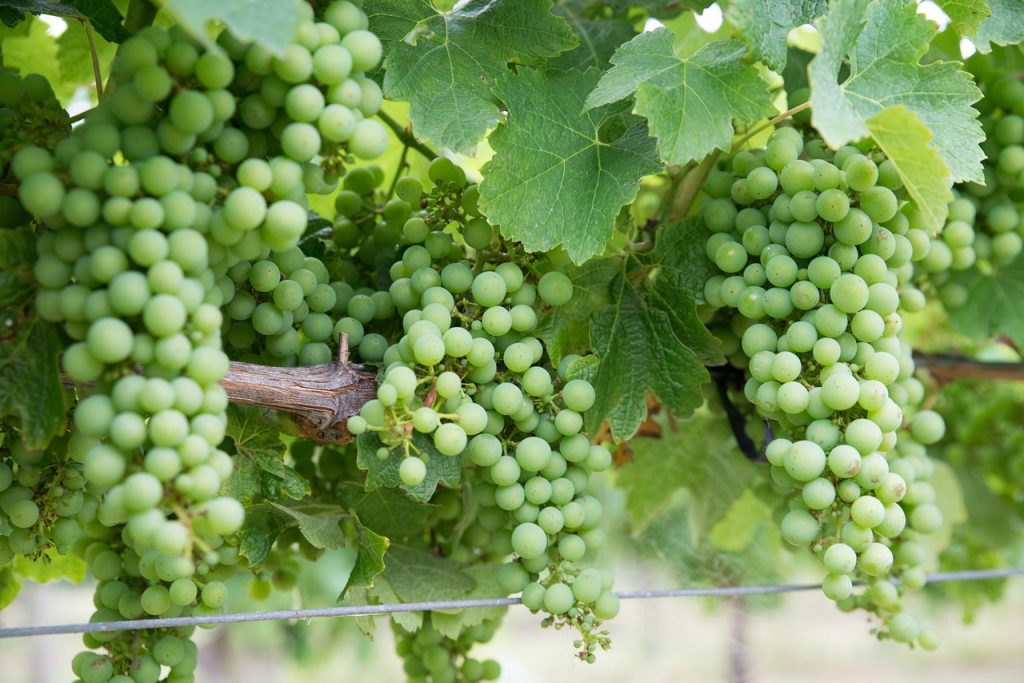
Several grape varieties are used in the production of dry white wine. Each brings specific characteristics to the wine, influencing its aromatic profile, structure and aging potential. Here are some of the most common grape varieties:
Sauvignon Blanc: Emblematic grape for dry white wines, particularly in the Loire and Languedoc regions. It produces fresh wines with notes of citrus, exotic fruit and often a touch of minerality.
Discover our Versant sauvignon
https://lesvignoblesfoncalieu.com/produit/le-versant-sauvignon/
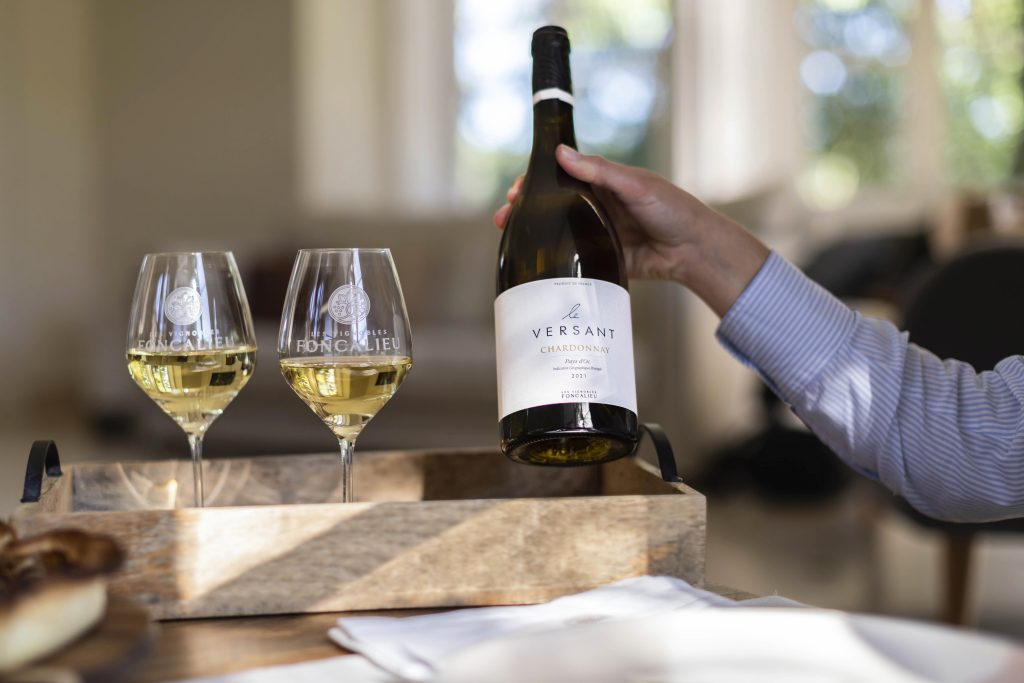
- Chardonnay: Used in many wine-growing regions, notably Burgundy and Languedoc. This grape produces rich, elegant dry white wines, with apple and pear aromas, and sometimes buttery or toasty notes, depending on ageing.
Discover our Versant Chardonnay
https://lesvignoblesfoncalieu.com/produit/le-versant-chardonnay/
- Riesling: A popular grape variety in Alsace and Germany, Riesling produces dry white wines marked by high acidity and aromas of citrus, white flowers and gunflint. It can evolve over time, developing more complex notes.
3. Food and wine pairing
One of the advantages of this wine is its versatility at the table. Thanks to its freshness and balance, it pairs easily with a wide range of dishes, from starters to desserts. Here are a few suggestions to enhance your meals:
- Fish and seafood: Dry white wines, especially those based on Sauvignon Blanc or Chardonnay, are perfect with seafood, such as oysters, shrimp or grilled fish fillets. Their acidity balances the richness of fish dishes.
- Cheeses: A dry white wine goes perfectly with certain cheeses, especially fresh goat’s cheeses such as those from the Loire Valley. Sauvignon Blanc is often the ideal companion, thanks to its herbaceous notes that harmonize with the taste of the cheese.
- White meats: Poultry, such as roast chicken or veal escalopes, find their balance with a round, dry white wine like Chardonnay. A dry Riesling can also accompany more exotic dishes, especially those with curry or spices.
- Asian cuisine: Dry white wines go well with spicy, tangy dishes such as Thai and Vietnamese cuisine. Their freshness and liveliness contrast with the spicy flavors of ginger, lemongrass or chili-based dishes.